
Scaling a design system from 1 designer to a team of 4
How I built the knowledge transfer infrastructure : Task Kickoff Briefs, early review gates, and team rituals — that kept brand consistency intact and designer productivity high as our team quadrupled over 2 years
Role
Product Designer, Product Manager
Team
Product designers
Product design intern
Timeline
18 mo | ongoing

1. Problem
The design system was already built. The knowledge to use it wasn't.

After the senior designer left, I ran the system solo for a 6 mo. Which meant every decision, edge case, and naming convention lived only in my head — consistent naming, fast decisions, full context across 100+ screens. The moment the team eventually grew to four, that context became invisible. The component library, tokens, and variables were all there. But new designers didn't know what existed, where to find it, or when to use what.
Four symptoms surfaced simultaneously:

2. Ideation
The symptoms looked different. The root cause was the same.
Before jumping to solutions, I mapped each symptom to the layer it actually lived in.

💡 Key insight
The system was solid. What was missing: context at start, direction check early, guardrails throughout.
3 Essential checklists

3. Solution
Built a Knowledge Transfer System, Shipped as One Infrastructure
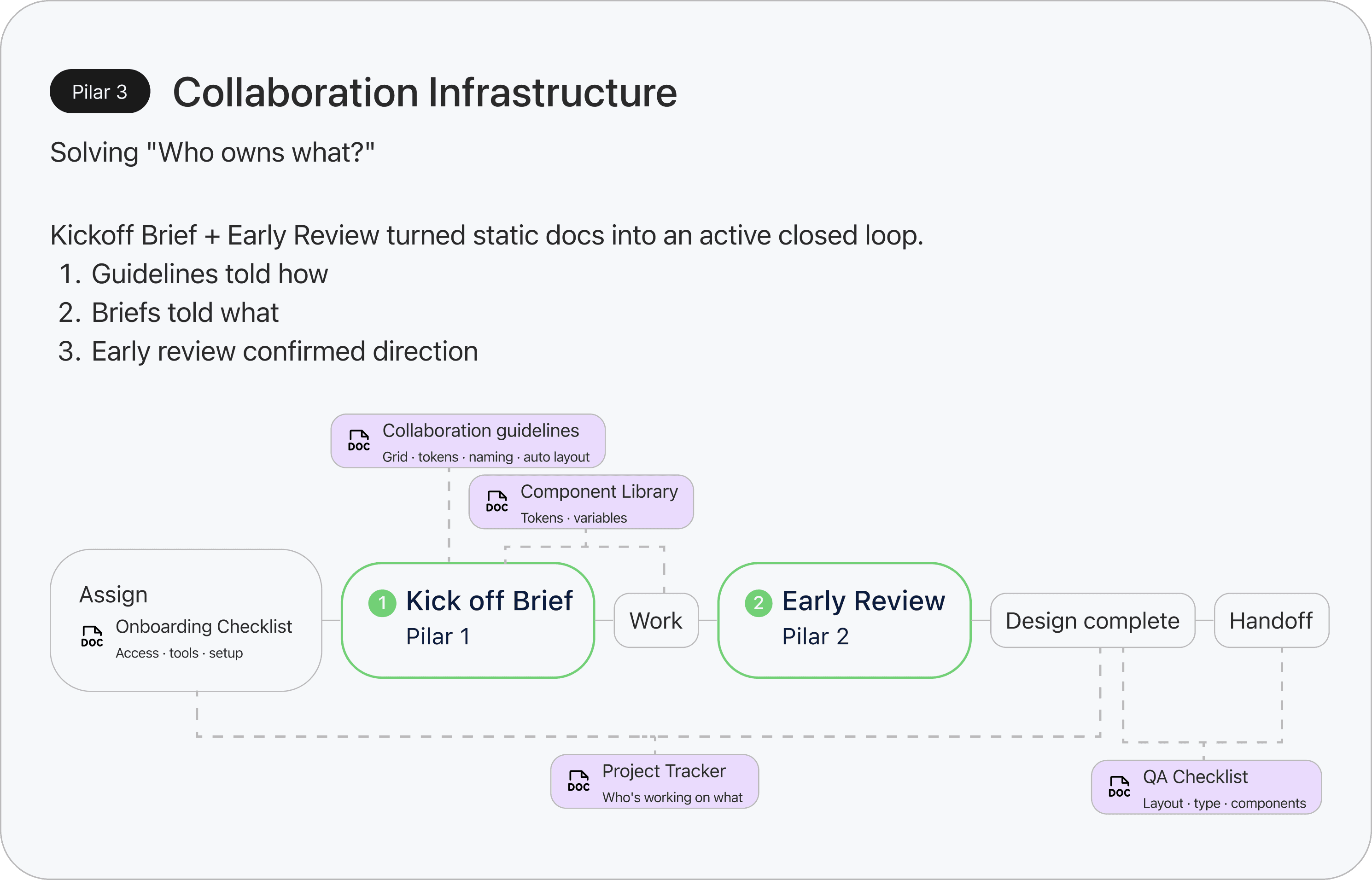
I didn't just fix individual problems — I built a connected system that transferred 2.5 years of product knowledge into a repeatable, scalable process.


Result
Domain knowledge transfer
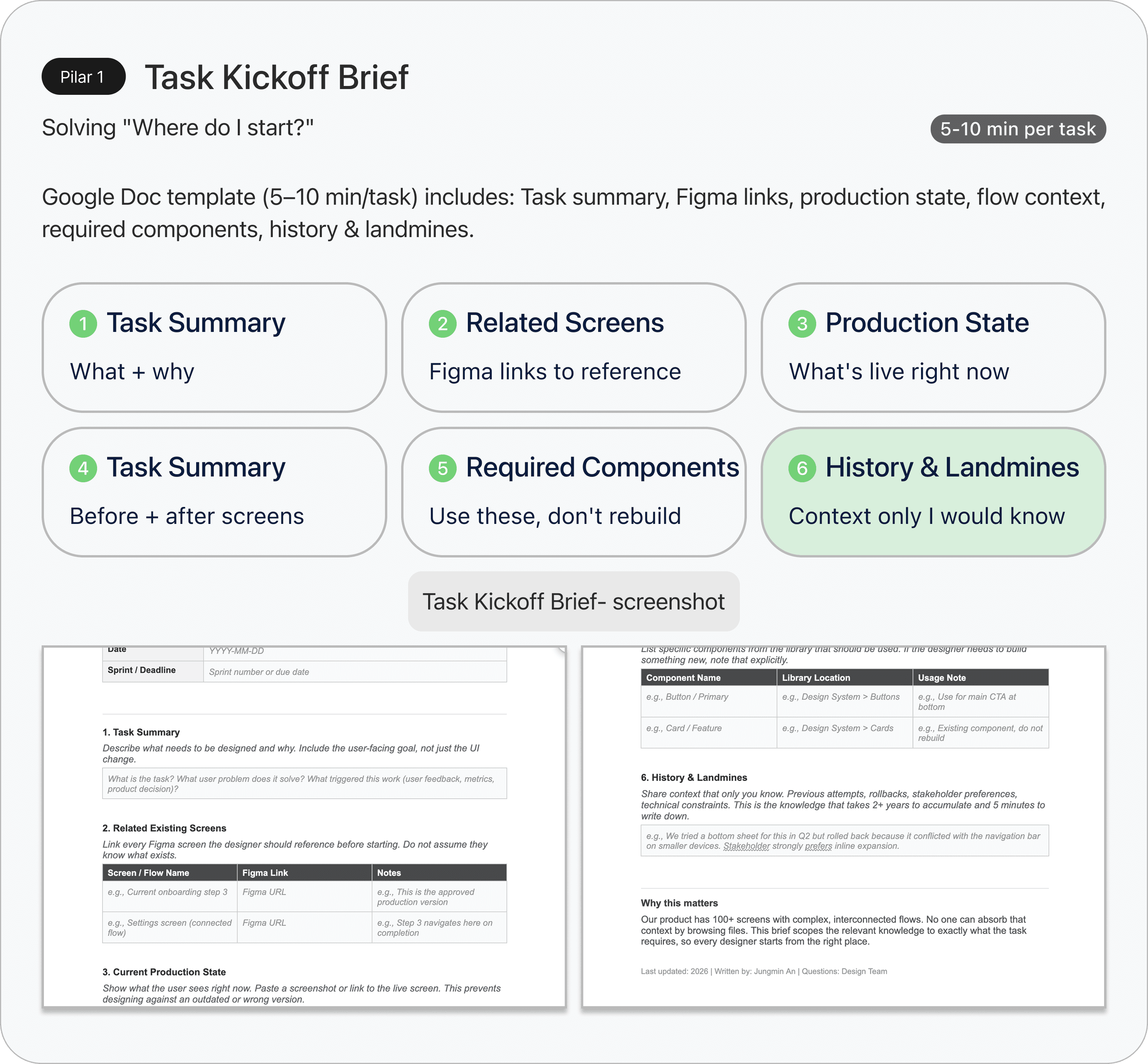
New designers stopped starting from the wrong screens. The Task Kickoff Brief gave every designer the exact context they needed — related screens, production state, flow connections, and historical decisions — eliminating the guesswork that previously caused rework.
Early review impact
The 20–30% review checkpoint caught direction errors before they became expensive. Feedback shifted from "This needs to be rebuilt" to "Small adjustment here" — reducing the rework cycle from days to minutes.
Handoff efficiency
Developer Q&A dropped significantly sprint-over-sprint. With standardized specs and annotations, engineers could implement designs without back-and-forth clarification.
Onboarding speed
New designers reached productive independence in days, not weeks. Instead of absorbing 2.5 years of product context through trial and error, they received scoped, relevant knowledge through each task's brief.
System adoption
The component library and token system that already existed finally got used consistently — because designers now knew what was in the library and when to use it.